
Your pricing page is a qualification tool, not a price list
Hiding pricing costs you good-fit buyers. Publishing it badly costs you margin.
Published 2 July 2026 · 6 min read · MG DigiGrowth

What buyers are actually checking
Most visitors to a pricing page are answering one question: am I the kind of customer this is built for? Tiers named by company stage or use case answer that faster than a feature matrix. If your page makes a buyer count features to work out where they fit, it is doing the wrong job.
Three ways to publish without racing to the bottom
Show a starting price with what drives it up. Show ranges by segment. Or show a worked example — a typical engagement, what it includes, what it cost. Each qualifies out the wrong buyers without committing you to a number you cannot honour.
Instrument it
Track scroll depth, tier hovers, FAQ opens and the exit rate to the contact page. A pricing page is the highest-intent page on most B2B sites and usually the least measured.
Take something useful with you.
An article, a framework and a guide — free, no sales call required.
How to redesign a website without losing your rankings
Most post-launch traffic collapses are avoidable, and they are all caused by the same handful of mistakes.
Read the article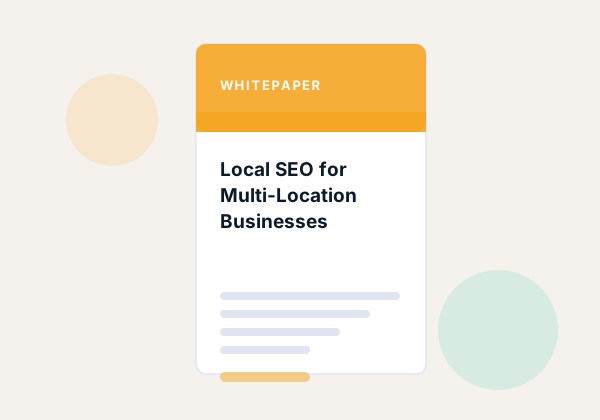
Local SEO for Multi-Location Businesses
The operating model behind consistent local visibility for clinics, restaurants, dealerships and multi-branch service businesses.
Download free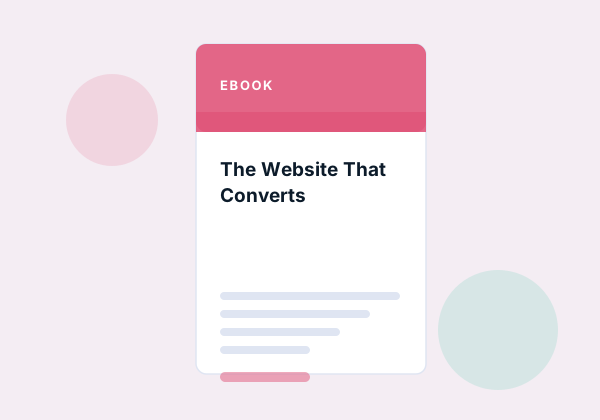
The Website That Converts
Structure, speed, messaging and forms — the four levers that decide whether the traffic you already buy turns into enquiries.
Download freeWant this applied to your business?
We'll audit what you have, tell you what's actually limiting growth, and scope the work that fixes it.